


JULY 2024 ISSUE
“You can dream, create, design, and build the most wonderful place in the world. But it requires people to make the dream a reality.”
– Walt Disney, Visionary

Architecture differs from other art forms in many ways. As discussed in the Procurement post, architecture usually requires the use of someone else’s money. I would add that it also takes more than just the artist (architect) to bring it to fruition. It takes excavators, foundation masons, block masons, framers, plumbers, electricians, tile setters, finish carpenters, and a host of other tradespeople. And it takes someone to choreograph all of these folks – the General Contractor. In residential construction, he or she is normally referred to simply as “the builder”. Most of the time the builder is using the tradespeople that they are comfortable with and have used successfully on other projects. Sometimes, the Owner will want to use a different tradesperson, that they know, for part of the work. The builder will normally go along with it, but they will forever refer to this tradesperson as “your guy.” If anything goes awry, it will likely be because of your guy!
And don’t forget the architect. During Construction Administration, the architect serves as the owner’s representative during this phase but works closely with both the owner and the builder. In general, the architect helps to insure that the builder has all the information he needs to keep the project moving. This includes reviewing pay draws, assisting in the change order process, checking shop drawings, and observing the project. The observations are to ensure that what was so carefully documented is, in fact , constructed the way the documents indicate. The architect cannot and should not be dictating how the builder performs his job, nor should he or she be following behind the builder with a tape measure! The main purpose of the observations is to insure that the design intent is carried out. At the end of the project, the architect prepares a punch list of any minor items required to officially complete the project.
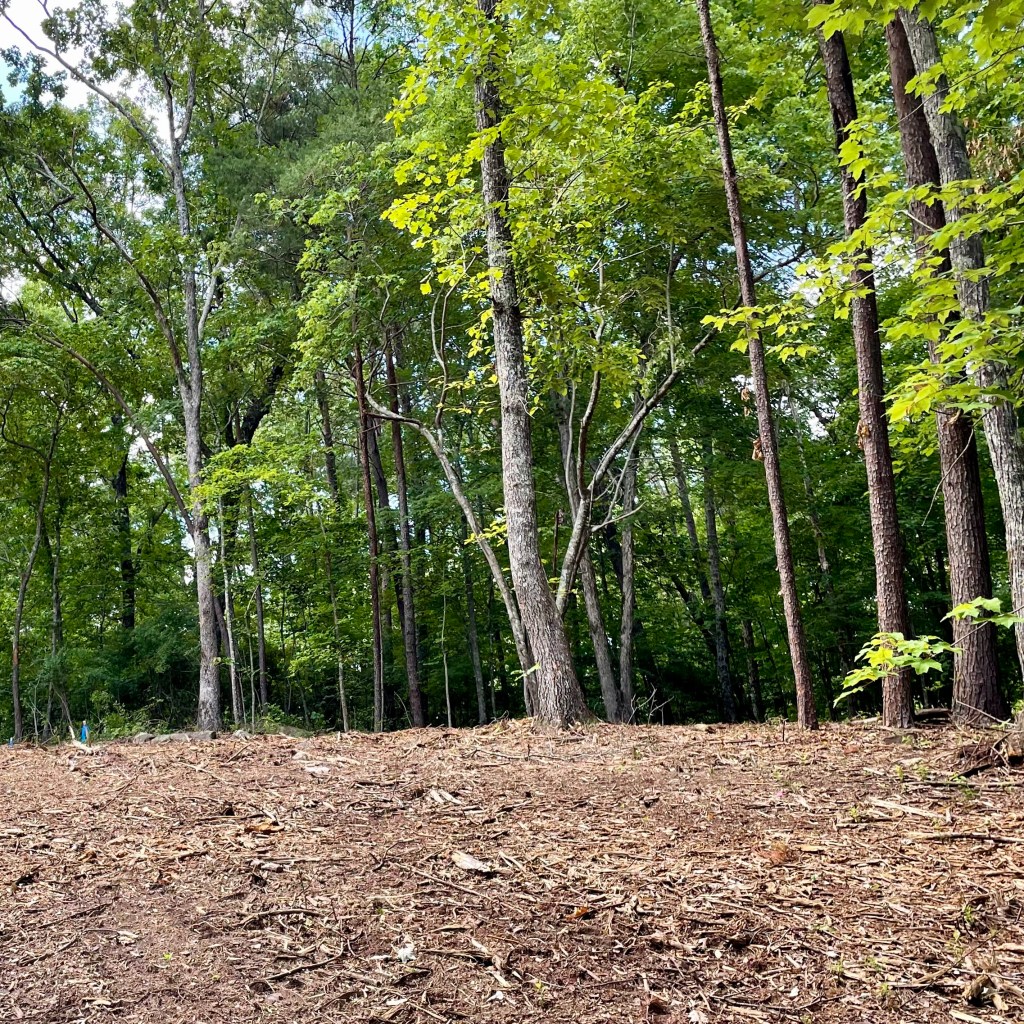
Construction begins with the site. Before meaningful work can be accomplished, the site has to be cleared for the building footprint and driveway. In addition, a “laydown area” for materials must be provided and there has to be an area to park for the workers. The surveyor normally returns to locate and flag the corners of the house and edges of the driveway, based on the drawings. Even though we do our best to get these right on paper, sometimes looking at it surveyed in the field suggests that we tweak something a bit – maybe the house slide up the hill a couple of feet, or maybe swing the driveway a little wider to save a tree. Once all this is figured out, the excavator is called to the site for some really serious work!
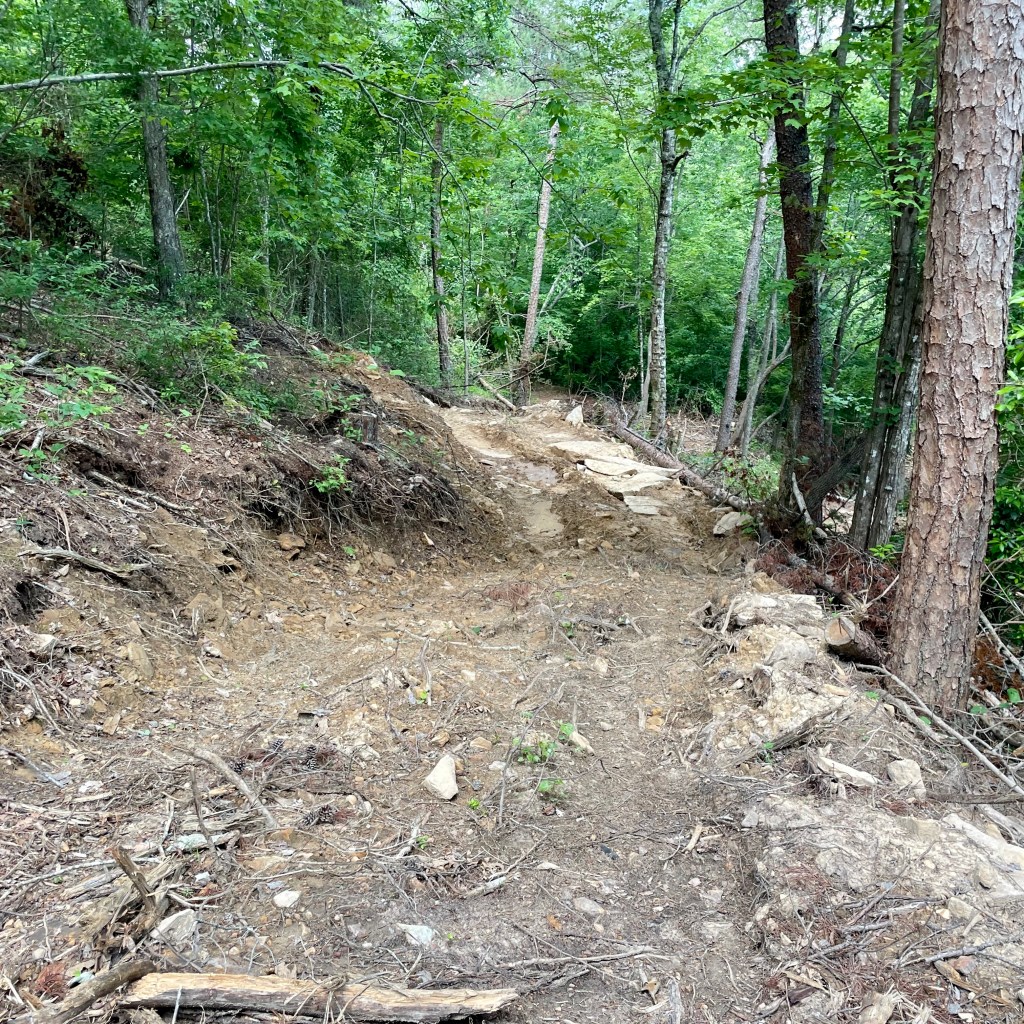
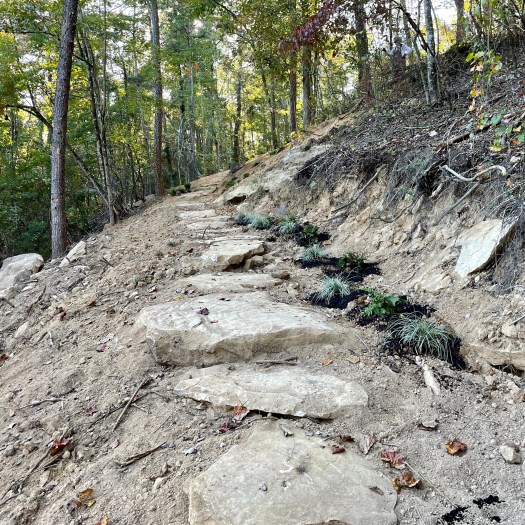
Normally the builder coordinates all of this, but in the case of the dinky House, I did the coordination of the surveyor and excavator, even before I officially hired the builder. In the Summer of 2022, John Lawton, my guy, cleared the building site, the driveway area, and the drainfield area. We called him back in the Fall to develop a footpath he had previously cleared across the steep incline from the dinky House to the Little River. He masterfully used the boulders he uncovered as he backed his way back up the path. creating the steps that make the path manageable.
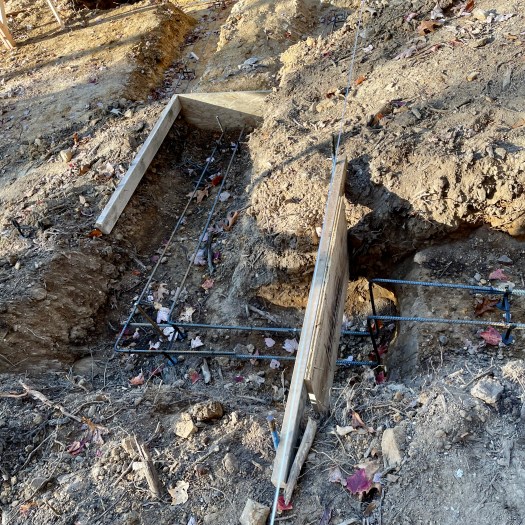
Also in the Fall we had officially hired Phil as our builder, and he took over. With the site cleared, what most think of as the actual construction can begin. Normally the excavator would move from clearing the site to digging the footings, but in our case, Phil used his guy to dig the footing and bring the utilities on site. The dinky house has a daylight basement, which obviously requires more excavation than simply digging for a crawl space. Fortunately we did not encounter any rock that could not be removed with the track hoe and soon the footings excavations were underway, stepping with the grade and reinforced with rebar along the bottoms (In bad soil conditions, the rebar are heavier or spaced more closely; sometimes additional rebar are required at the top). Luckily our dirt was good and soon the footings were ready for concrete.
Deviation: Everyone understands how dependent on the weather that farming is. Few understand that construction is as well. Among those who do are builders and their subs and suppliers. Also among them are those brave souls who have undergone the process of building their homes!


In North Alabama, the late fall and winter months tend to be our wettest of the year. 2020 was not an exception and for several weeks Nature toyed with us. To pour our footings, not only did the skies have to be clear, but the gravel road leading to the jobsite had to be dry enough so that a really heavy cement truck did not get stuck in a rut. When we got a marginal break in the weather, Phil ordered half-full trucks so that they could get to and fro. Clever.
Soon the concrete block was delivered, which was the catalyst for more strategically spaced rain. A new group of workers, the block masons, were finally able to make it to the site. They made good headway on the basement and the crawlspace walls and completed them shortly before Christmas. This was kind of a milestone – construction going vertical!
This ended 2022 and is a good place to end this post. Next we will follow the progress of filling the block, pouring the slab, erecting the SIPs panels, and the rest of the wall and roof framing. Join me in August for construction administration 2: Dried In.
BONUS Material:
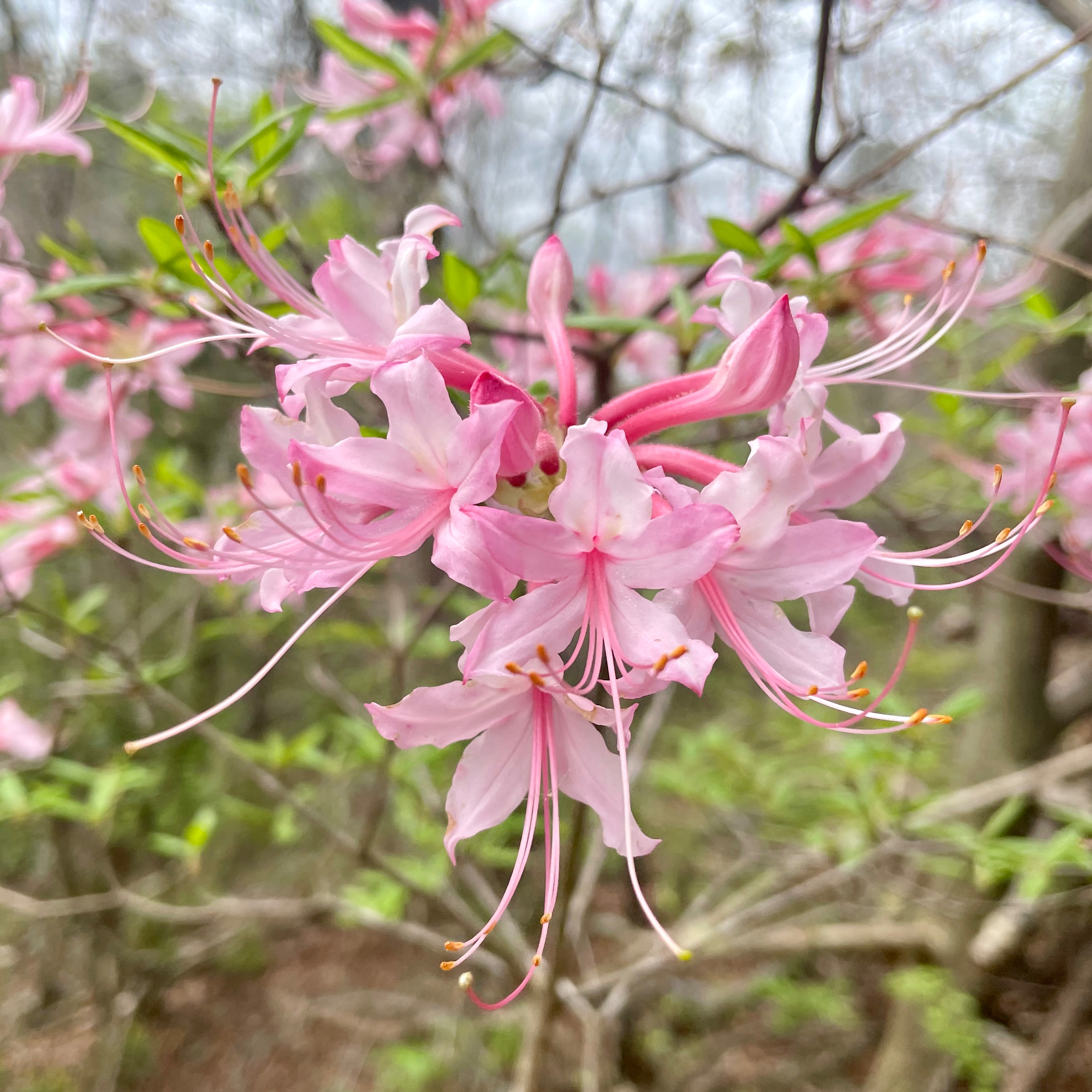
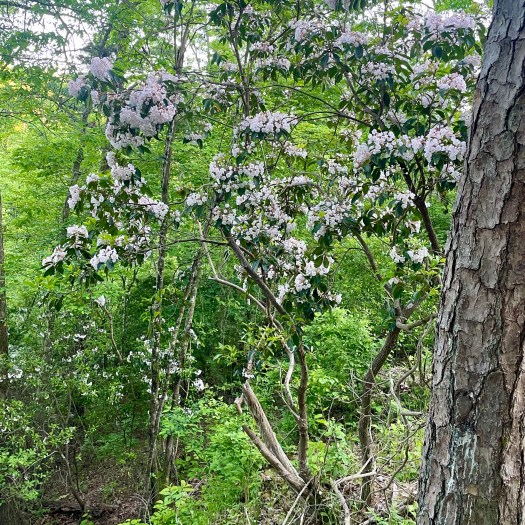
When we purchased the dinky site, the trees and flora populating it were native….well, mostly. Unfortunately, some non-native species had been introduced over time. The result was that the site was really overgrown with vines, thickets, and weeds. That was not what we wanted, nor did we want a classic suburban yard, with pristine sod and manicured boxwoods. What we wanted was a native landscape, with maybe a select few adaptive plants…but not invasives!
I would suggest that there is a vast difference between an appreciation for the outdoors and an appreciation for native beauty. It is possible to appreciate what is around us, without really knowing what should be around us. Susan, who is a gardener through and through, immersed herself in the study of native plants before the ink was even dry on the purchase agreement. She convinced me that if we got rid of the invasive plants, the native plants would thrive. And, oh yeah, we might want to add some additional plants in a few places as well. One side benefit to native plants, she explained, is that they don’t require much care, since they are in tune with their environment. And so, we began our quest to reclaim the native beauty of our dinky site in April of 2022. The invasive plants fought back vigorously, and the plants we added have required considerable work to get established. Susan swears that this will lessen considerably after a year or so. I think she’s lying again!
So, what are we left with today, after hundreds of hours of cutting, digging, pulling, watering, and planting? And after decimating our landscaping budget? Well, I know I’m biased, but I think we have revealed and enhanced one of the most beautiful settings anywhere. Every time we return to the dinky site, there is something else blooming – native, natural, beautiful. And it’s just getting better and better and better. It turns out that Susan, once again, was right.

 we shape space