


OCTOBER 2024 ISSUE
“The phrase the light at the end of the tunnel is a metaphor used to refer to signs that a long period of adversity is coming to an end.”
-David Wilton, Author of wordorigns.org

Perhaps no other metaphor better describes project completion. The journey is long and the turns are many. There are long uphill inclines and treacherous decents, but at some point…the process ends. For most, getting to the rough-in phase represents the journey, but once the rough-in phase is complete, they can at last begin to see the light at the end of the tunnel, even though it is still a long ways off. Regrettably, the light cannot be reached without going through the finish stage. Just as with the earlier phases of constuction, the fits and starts continue throughout this stage as well.
Finish work includes a long list of tasks. Fortunately many are not on the critical path, which helps things move along. In general the tasks are very similar from job to job, so I will run through the tasks completed at the dinky house. Hang with me. There’s a lot!
With all the rough-in work completed and the insulation installed, the drywall hanging was next up. Normally drywall is rough hung with gaps at the floor level and around the windows. Baseboards and window casing cover that gap….typically. I designed the dinky with precious little trim. The drywall work required a little more attention than it usually would but that’s somewhat offset by the fact that there was no casing and crown moulding to deal with. Just before the hanger finally got to us, he and his guys all contracted COVID. This pushed his already busy schedule back ever further. After burning through the first half of August 2023, Richard and Hunter ended up doing the drywall hanging, primarily so they could install the doors. This was a critical path task, so it was a relief to have it behind us. In the midst of the hanging, the tile setter showed up to install the cement board and prepare for the tile installation. Since August was fairly dry, work also progressed on the exterior. My guy installed the septic tank and drainfield, as well as four rows of drain line, buried in pea gravel, on the uphill side of the house.
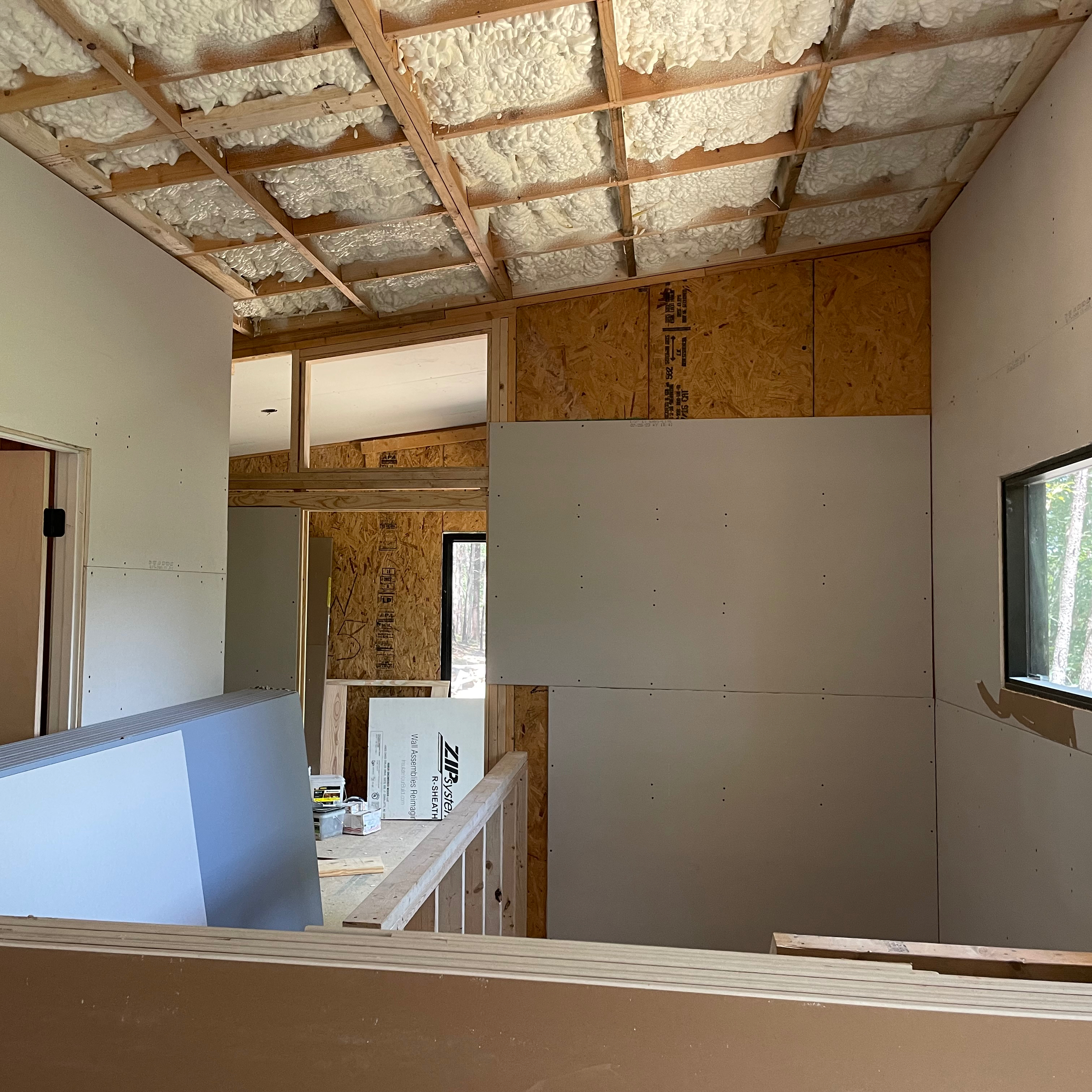


Richard and Hunter switched back to the exterior to finish the siding and plywood ceilings, then to the inside to install wall paneling in the Primary Bedroom accent wall and the Foyer. They also installed the plywood ceilings in the vaulted areas. Game changer! Squeezed in between, the drywall finisher did his taping, mudding, and sanding. By the time September rolled around, both the interior and exterior were far enough along to start the painting of the exterior siding and the staining of the plywood ceilings. Painters also applied the tinted primer coat to the drywall ceilings and walls, allowing the electrician to install fixtures and ceiling fans. This work took us through September and well into October of 2023.


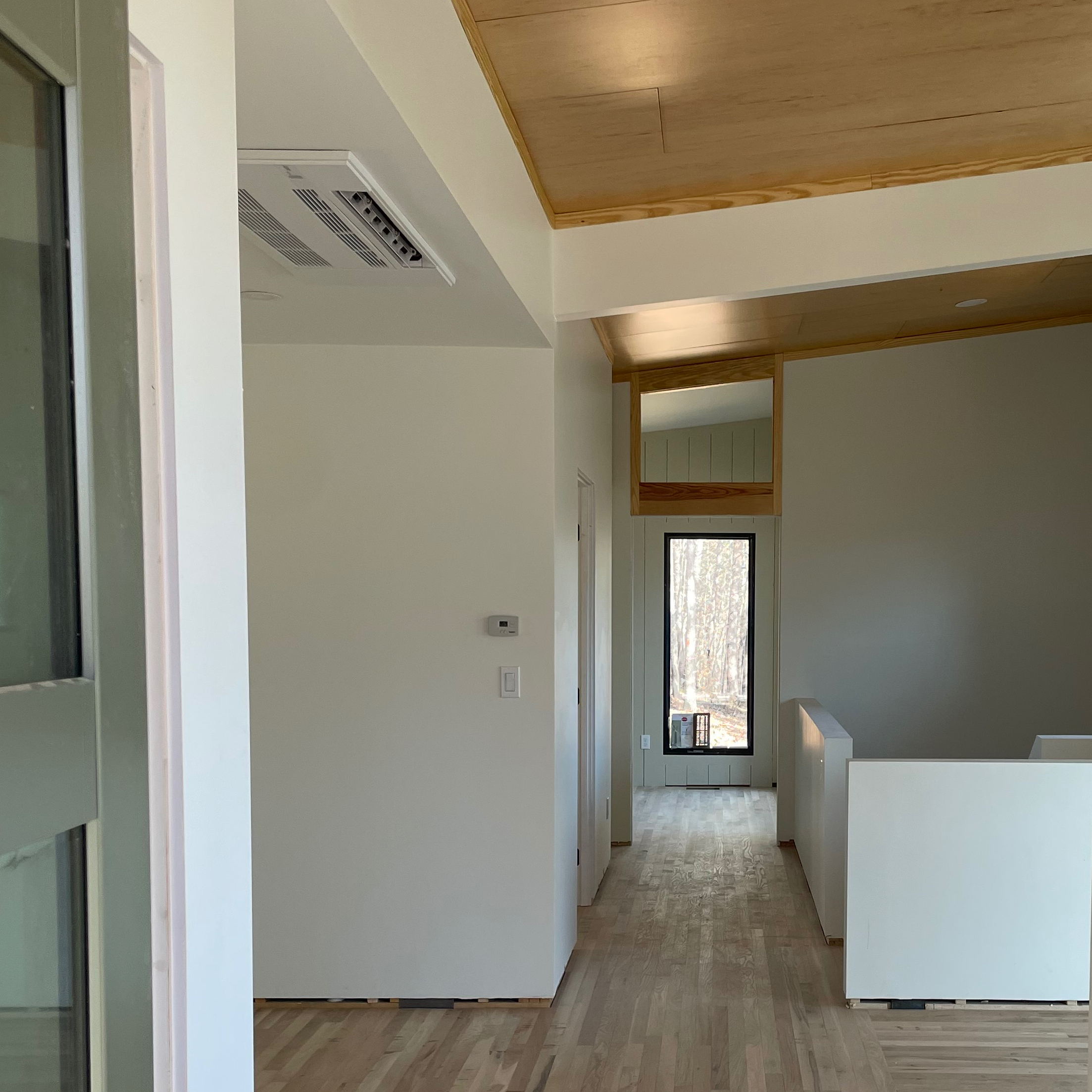

I’ve always loved classic strip oak floors, sanded and finished in place. Before installing this type of flooring, it is important that the HVAC is operating, so the boards can climatize. The mechanical contractor had little to do in the finish phase other than to physically install and connect the mini-split units. All this was done shortly after the painting. Once the flooring arrived, the dinky was in the middle of the acceptable temperature and humidity range. In addition to the flooring, the parapet wall caps surrounding the stair, the stair treads, and even the handrails were all fabricated from white oak. The finish we decided on was a product I had never used before. It was a penetrating finish, only slightly shinier than the raw floor, and lacked the slick feel of polyurethane. I think the matte finish looked great and I like it even more as time passes. The light filters in without the mirror effect of high gloss urethane. And with the completion of the wood floors, went the remainder of October.


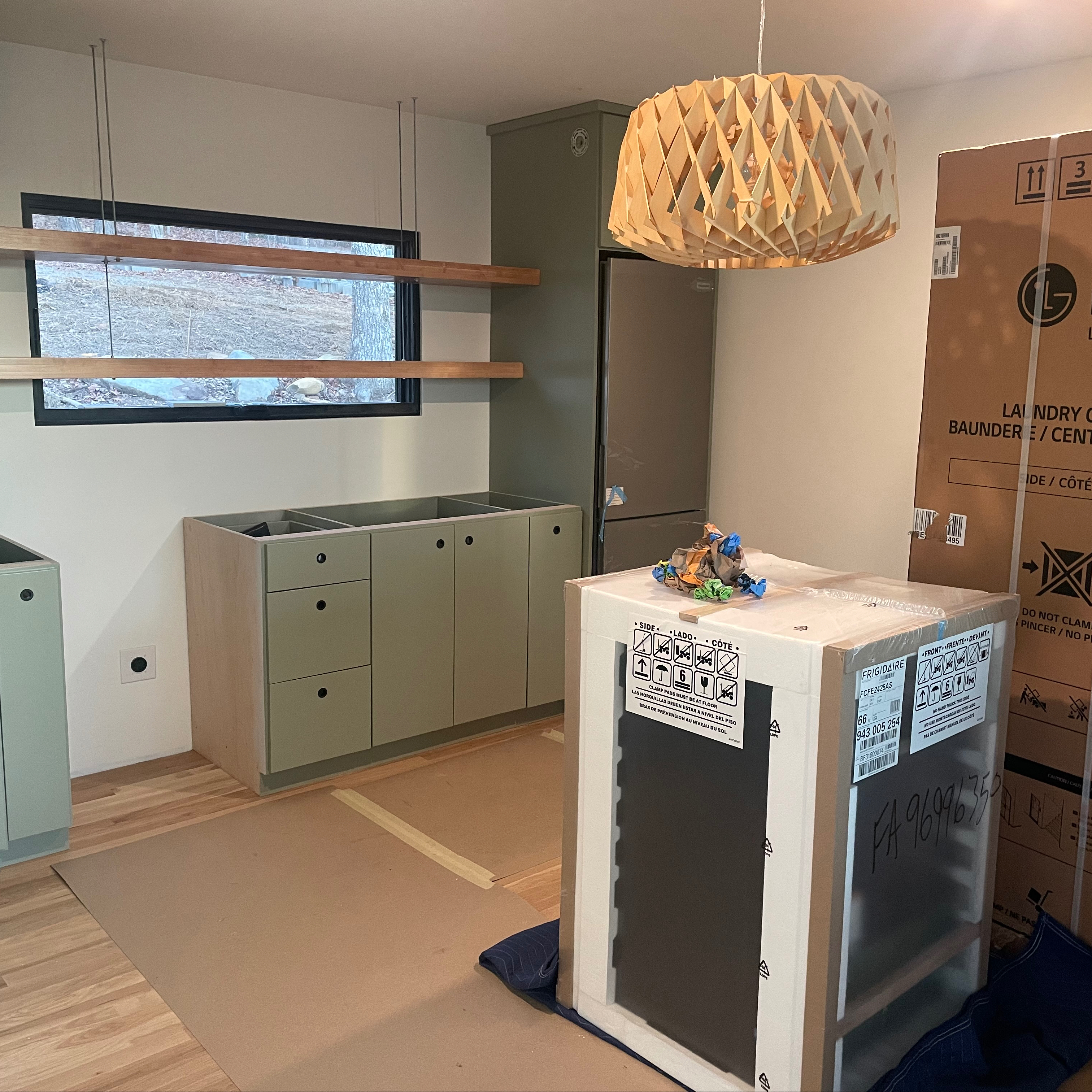
November brought both periods of rain and periods of sunshine. Susan and I continued to spend our weekends laboring in the increasingly brisk outdoors. We built gabion planter retaining walls, had our guy install them along the uphill portion of the house, where Susan and I filled them with rocks and plant material. We also planted numerous trees and shrubs to ground the house and provide some erosion control. The rains revealed where the drainage issues were. Enter shovel, wheel barrow, rock, piping, and a sore back! Inside the dinky, Richard was ready for the cabinets and probably beyond ready to free up his shop space. He carefully installed the cabinets over the newly finished wood floors. We were really happy with the painted green look. I was especially happy with the drilled and grommeted “pulls” and the chunky floating shelves. The cabinets arrived along with Thanksgiving! I always caution my clients that very little construction takes place between Thanksgiving and New Years. I hoped the dinky might be an exception, but alas….it was not to be. The electrician did manage to install the light fixtures and the tile setter completed the shower and tub.

By the beginning of 2024 we were “in the short rows”. The light at the end of the tunnel was getting brighter! We’ll delve into that next month, when we confront the remaining tasks, go through the punch list, and get through the tunnel. Join me for “Whew!”
BONUS Material:
The first episode of the Dinky Chronicles contained bonus material explaining the origin of the “dinky House” name. The surrounding area was used to mine coal in the early 1900s, then as a hunting destination (the “subdivision” in which the dinky House is located is called Hunters Ridge). In 1928 Lookout Mountain Camp for Boys opened and ushered in a new type of destination – the Camps. Lookout Mountain Camp is still in operation. We can literally walk a half mile down the dinky line and walk directly into the camp. By 1950 several camps called the area home, each appealing to a different type of camper.,

After noticiing a couple of camp pennants in the Mentone Market, we decided this would be a great way to decorate “the dormitory”. It’s a little nostalgic for me, since my childhood bedroom was covered in pennants, of all the teams that beat my beloved New Orleans Saints,….but back to my point. The dormitory was designed with our grandchildren in mind and the pennant idea stuck. Susan sought out pennants from the surrounding camps. Since the dinky house now has a little slack line play area, some floats, a kayak, and lots of fly rods, we decided we could run our own unofficial camp for our little campers. I dubbed it Camp dinky and went to work designing a pennant for our camp!

 we shape space