epilogue: NEVER REALLY FINISHED

DECEMBER 2024 ISSUE

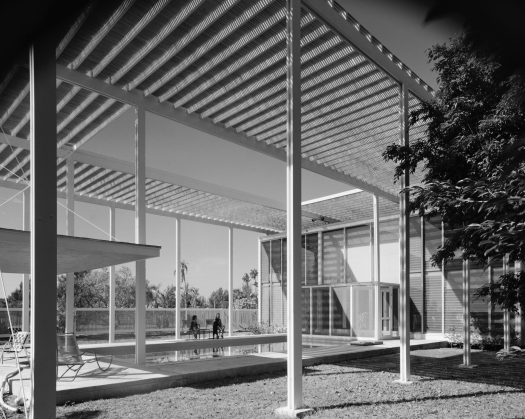
“Architecture is like frozen music, and the role of the photographer is to make it sing.”

            Ezra Stoller, Photographer

Early on, a vision of the architect’s project begins to jell. The design process is all about developing and documenting that vision so that it can ultimately be translated into built form. At least for me, the vision includes not only the building but its contents as well. In many cases, the owner develops a very different vision and furnishes the house in a way that taints the architect’s perceptions. (Perhaps another example of arrogance on the part of the architect, but it remains true)! This discrepancy in visions may explain why, in some cases, the architect chooses to photograph a project before it is furnished. In other cases, the visions are in closer alignment and the architect chooses to photograph the project after it is furnished. A well-appointed house enhances the architecture, and good photography can capture that. Great photography goes even further, by capturing the house’s underpinnings, or what Francis DK Ching calls “form, space, and order”.
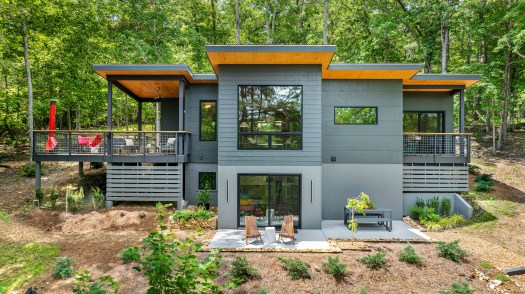
Higher Perspective photograph of the dinky House

The contents within the house area referred to as FF&E (furniture, fixtures, and equipment) and are typically outside of the scope of the architect’s work. Owners and/or interior designers are the ones who normally deal with these things. I once heard FF&E explained this way: If you pick up a finished house, turn it upside down, and shake it, whatever falls out is the FF&E. The part you’re shaking is the architecture.

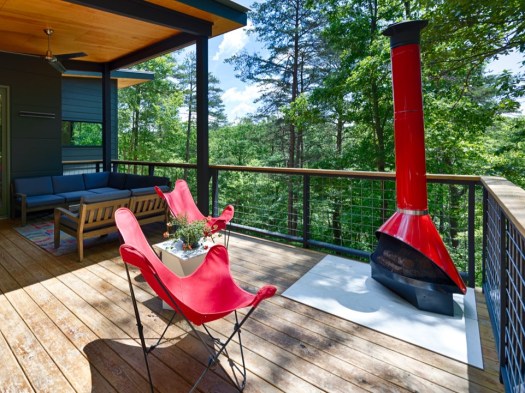
In the case of the dinky, most of the FF&E was new, since we didn’t move. We still live in the BirdHouse during the week. So, Susan and I (but mostly Susan) spent months collecting furniture and furnishings. We also seized the opportunity place a couple of classic pieces that had been gathering dust for decades. One was a fire-engine red funnel fireplace that Susan won in a raffle in the 70s, which was converted to a chiminea and now sits proudly on the deck. Another was a recently restored classic Dr.Pepper machine salvaged from my grandfather’s welding shop, for which I carved out a niche near the stair. I modeled these things and placed them, along with the other furniture, in my house model so we could visualize various options and scenarios. When designing any custom house it is important to make sure the furniture works. In a small and efficient house, it is especially important.

Dr. Pepper machine
fireplace

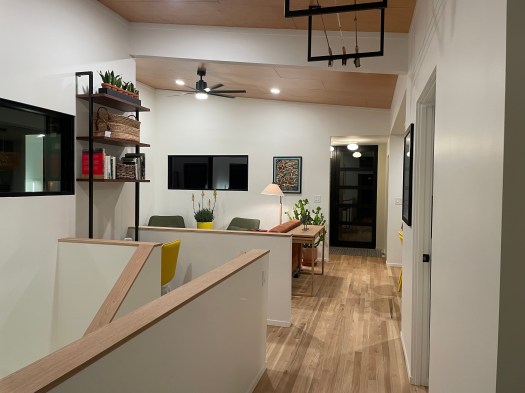
Assuming you want your house photographed, deciding when to do it is tricky. You will probably think “once it’s finished”, but when is that? I would contend that all projects, the dinky included, are never really finished. There is always a dangling punchlist item that was not checked off, or a piece of furniture to add, or some artwork to frame and hang. At some point, however; even though it’s not completely finished, it’s finished enough! At the dinky, that time was summer. I hired Urban Lens to photograph the interiors and Higher Perspective for drone shots of the exterior. We’re quite happy with the results. I think they show the house well, and give the viewer a pretty good sense of the spaces. Interestingly, they also make the house look larger than it really is, and than its name suggests. Ah, the magic of photography!

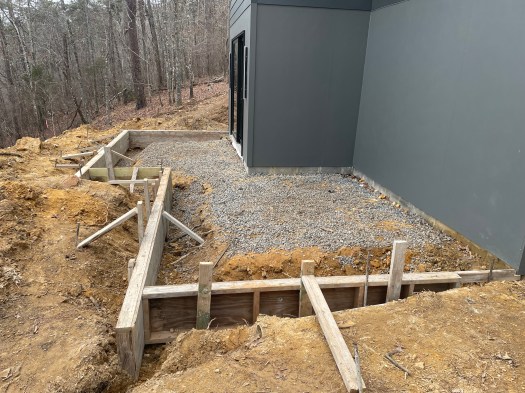
The kind of project that we originally embarked on may have reached a point where the house is photo-ready, but it will take more time for the site to reach the same point. In the last few months our focus has moved back toward site improvements. In addition to landscaping, we’ve been thinking about the benefits that a small carport would offer. Primarily it would provide shelter for an EV that Susan has been eyeing. It could also provide a convenient place to store yard tools. If sited at a lower elevation than the existing parking area, it would to allow a more accessible path to the dinky. What I’ve dubbed the dinkier carport is now in the preliminary design stage. I suspect that we’ll come up with other “necessary” improvements along the way. In other words, the dinky project is not really finished, and may never be!

THE dinky CHRONICLES, on the other hand, are finished!

dinkier Carport

BONUS Material:

I began THE dinky CHRONICLES in January of 2023. This, the final post, is being published in December of 2024. The design and construction, at least for our original scope of work, is now behind us. We have experienced weekend living in this cabin, on this site, in all four seasons. The verdict is out, and we love it!

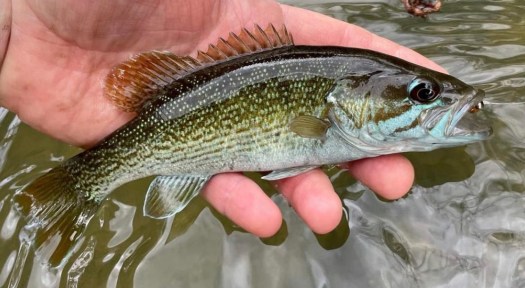
As established in the initial issue of THE dinky CHRONICLES, Prequel: AN ORIGIN STORY, the dinky House is, at its core, a fishing cabin. The architecture of the dinky was inspired both by this function and by its river-focused site. The Little River is a wild river and the fish in it have not been stocked. They are native. The redeye bass, for example, have inhabited these waters for millennia. In short, they belong there. I catch them, appreciate them, and then I let them go. I want these beautiful and unique fish to remain for future inhabitants to the dinky – my grandchildren, and theirs.

A dinky bass out of the Little River.

construction administration 5: WHEW!

NOVEMBER 2024 ISSUE

“A doctor can bury his mistakes but an architect can only advise his client to plant vines.”

            Frank Lloyd Wright, Architect

The Architect and the Owner are often given the benefit of the doubt during construction. Curious neighbors may say, “What is that framing on the side of the house all about?” Relatives may ask “Are you really going to leave it painted black?” After construction, however, the juries begin to render their verdicts. If the architect’s vision is wonky, if the program is too restricted by owner, or if the contractor is not up to par, this is where it will all become evident and you may be forced to plant vines! I like to think that vines are not necessary on the dinky House!

Dec. 2023 – “Ready or Not” Move In

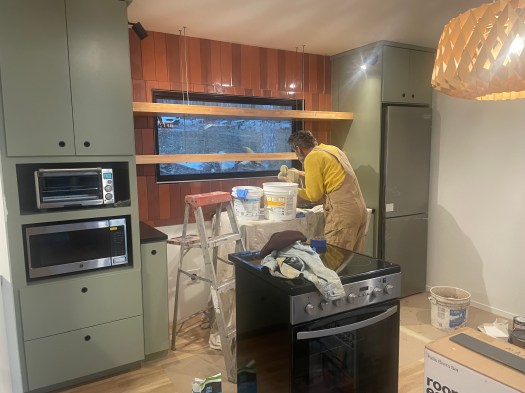
Whew! This is the final post following the construction administration phase – the time following it to the point of “substantial completion.” The last post, Seeing the Light, took us right up to the 2023 Christmas season. The original construction schedule had us scheduled to be complete by the end of October, and I had taken off the week between Christmas and New Year’s for the move in. As October drew closer and we still had a good ways to go, I was forced to go back to the bank and tell them I needed an extra couple of months. This happens …. a lot. By the time Christmas arrived, project completion was close enough that we opened our presents, ate our dinner, woke up the next day and started the move in. The appliances had not been installed, we still had a little tile left, the shower door had not been installed and the final punchlist had yet to be written. We also added a concrete patio leading from the Dormitory. This was a “change order” that I presented to Phil late in the process.

Jan. 2024 – Rear Patio
Dec. 2023 – Tile Splashes

The countertops had just been installed, so the tile setter was working around me as I was putting together furniture in the middle of the Living and Dining area. The glass guy slipped in and installed the shower door. Susan kept busy cleaning the place, which is something that is usually subcontracted. Susan had been ordering furniture for months and storing it in our garage and a small rental storage unit nearby. Susan knows that I actually enjoy putting furniture together. She blessed me with plenty of enjoyment, We kept busy from the crack of dawn to the dead of night for the remainder of my “time off”. The transformation was pretty amazing.

Jan. 2024 – Move in mostly complete

Time for me to generate a belated punchlist. A punchlist is simply a room by room listing of all the things that are not complete, not working, or not to the level of refinement that should be expected. Ideally, the architect would do the puchlist when the builder thought he was substantially complete. Once all the punchlist work was completed, the owner could begin the move in. My punchlist was relatively short, partially because we did a lot of it ourselves during that week. I actually like doing things like installing door hardware, toilet accessories, and that kind of thing.

There are a couple of other things pertaining to construction administration worth mentioning. During the course of the dinky House construction, because of my dual archictect/owner role, I was at the jobsite a lot! Sorry, Phil! In my day-to-day role as just the architect, I usually visit a jobsite just enough to stay abreast of the progress of the job. That’s normally a couple of hours every other week, but sometimes more, depending on what is or is not happening. I’m there to provide another perspective for the owner and to make sure that the vision I documented on paper ends up in brick and mortar. We call these visits “field observations” and not “inspections”. It is not the responsibility of the architect to catch every mistake the builder may make or to tell him when and how to construct the project. The means and methods are up to the builder. I normally spend whatever time is required to carefully look over the jobsite, alert the builder to any deviations from the contract documents that I encounter, answer any questions the owner or builder may have, and gauge the progress so that I can make sure that the owner and I have decisions made so as not to impede progress. I normally follow these visits with a Field Observation Report. Depending on the agreement, I often review the builder’s pay request to make sure they are in line. The builder is fairly entitled to be compensated promptly for work completed and for necessary material deposits, but should not request funds for work not completed. There are rare occasions when a builder is borrowing from Peter to pay Paul. Architects also make sure that a project is closed out correctly – punchlist completed, warranties turned over, and liens releases are signed. The architect is also coordinates change order to make sure they are fair and equitable. Spread out over the course of construction, there is quite a bit of effort in this phase, which is why it is normally about 25% of the total architectural fee.

So, back to the dinky House. It seems like we were finally finished, but were we really? That question will be answered in the final issue of the dinky Chronicles. Join me next month for Never Really Finished.

BONUS Material:

In the summer of 2009 my youngest daughter was preparing for college. She and our other daughter, already in college, decided that Susan needed someone other than me to nurture. Specifically, they felt she needed a puppy. The girls hounded Susan for weeks (pun intended) until she caved. My only responsibility with the new puppy was to name him, which I did, after the legendary architect LcCorbusier, or Corbu for short. I anticipated that Susan would fall hard for the cute little puppy as he peered out from his tiny crate. What I did not anticipate…. was that I would too.

Corbu quickly took over the house, then he claimed the yard. He also commanded a roving boundary, within sight or earshot of Susan. She knew him best and was the first to channel his often random thoughts, although I quickly learned the art as well. Susan was the Momby and I was simply Dad. Anytime we left the house, Corbu would jump in his crate, knowing that we might take him with us. We often did. He was the best traveler of all the children. He was so quiet that sometimes we would look in the crate to make sure he was still there. Of course he was, but he would occasionally slide under his bedding, as if he had disappeared – the Amazing Corbini!

Ruler of the House
Protector of the Yard

Corbu loved to play. He would take squeaky balls to the top of the stairs, drop them, then go chase them down. If he was downstairs and Susan or I squeaked a ball upstairs, he would immediately run up and grab the ball with his mouth. He could tell them apart by their squeaks! Even though he never reached his goal of 12 pounds and had to take ten steps to match my one, he loved to “go for the walk”. Rarely did a day pass that we did not roam the neighborhood together. Neither wind nor rain nor dead of night could stop us from our appointed rounds. He was a really clever dog and could navigate the neighborhood well, and even turn for home when he started to get winded. Corbu liked to explore and go on hikes with us. One of his last was to the property where construction of the dinky House was about to begin.

To our great sorrow, Corbu died unexpectedly during the Summer of 2022. We had anticipated he would be laying claim to another place, but it was not to be. It did not feel right for Susan and I to be enjoying the dinky without his presence. We decided to commission a pop art poster and gave it the most prominent spot in the house. I know it’s weird, but It seemed right. It’s our tribute to the best dog ever!

Corbu: 2009-2022

construction administration 3: MORE THAN SHELTER

SEPTEMBER 2024 ISSUE

“What I try to do is the art of building, and the art of building is the art of construction; it is not only about forms and shapes and images.”

Peter Zumpthor, Architect

Peter Zumpthor in his Studio in Switzerland

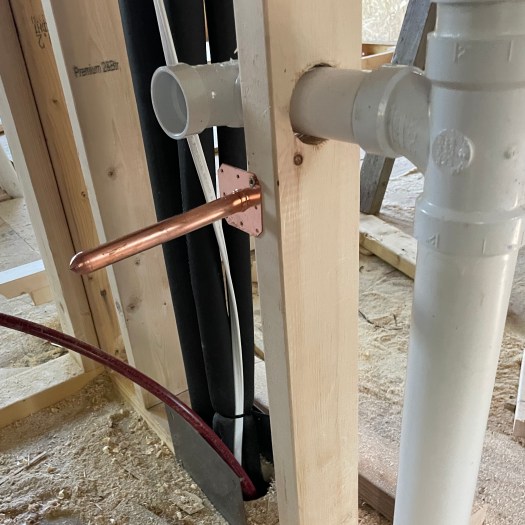
Peter Zumpthor is both a visionary and a practical architect. He understands that architecture is a practical art. A house is not just a piece of sculpture, nor is it simply shelter. although it must serve the physical needs of the users. The obvious physical needs to be served include provisions for eating and drinking, personal hygiene, sleeping, and exercise. Others include items of comfort such as thermal comfort, acoustics, and indoor environmental quality. The primary systems used to address these needs are plumbing, HVAC, and electrical, and they are installed in two phases. As soon as the house is dried in, the first of these phases commences; the rough-in.

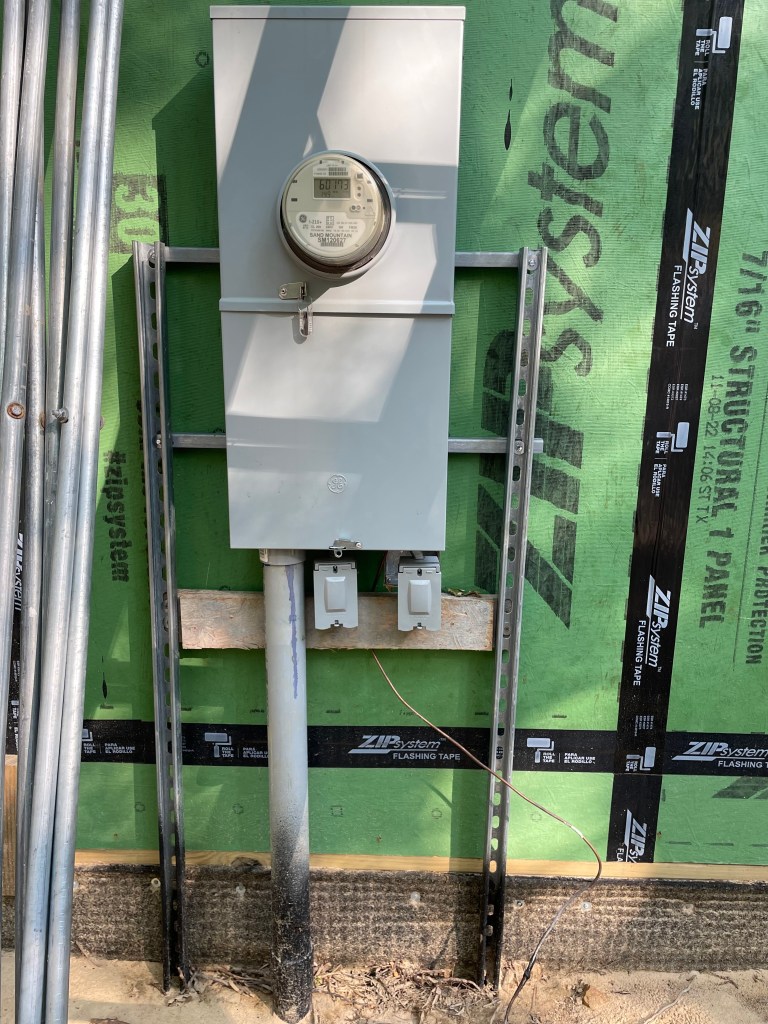
main power to meter

The sitework contractor normally runs all of the utilities from the utility company connection point to within ten feet of the house. The plumber, mechanical contractor, and electrician pick them up from there. The site utilities are normally run early in the construction process and are in place when the rough-in work begins. One common exception occurs when city sewer is not available, such as on a rural site. In such a case, a septic tank and drainfield are required. There are other exceptions of course, such as when the house is “off the grid”. In the case of the dinky, we did not have city sewer but we were on the grid.

Rough-in is a rare series of events where multiple subs can work simultaneously. The first of the rough-in subs to the jobsite has the advantage of running their system of piping, ducts, or wiring without having to work around the systems of the others. Occasionally the rough-in subs are all there at the same time. I’ve seen that happen on some of my projects, but not so much at the dinky house. As summer approached, construction continued to move at the speed of Jello! (Editor’s note: My cynicism is not really warranted, since I was well aware that Phil worked the dinky project into his busy schedule.)

The HVAC sub was the first to arrive in early June 2024. Most of the houses in our region of the country utilize forced air systems, but mini-splits are becoming more common. With no attics to run ducts, its whisper quiet operation, and its uber efficiency, mini-splits made perfect sense for the dinky. The use of SIPs meant that I could heat and cool the whole house with just a couple of tons. The rough in was pretty straightforward. They set the outdoor units (condensers) and ran the line sets to where the indoor units (air handlers) would eventually be. The plan called for one unit in the basement, a slightly larger one in the dining area, and one in each of the bedrooms. In a really tight house it is really important to vent it well. With an ERV bringing fresh air in and whisper quiet exhaust fans taking stale air out, we were able to maintain good indoor air quality. One “trivial” thing I want to mention. I walked into the dining area one day and noticed they located the controller smack dab in the middle of the wall, just like they always do. I had them relocate it, to the location along the edge indicated on the drawings, just like I always do.

mid June 2023: ERV in crawl space
early June 2023: Line sets, PEX supply, PVC waste

The electrician was part-time, which was a concern only for a very short period of time. He installed the panel and started pulling wires right away. He worked evenings and weekends to set the boxes for lights and plugs, except for those that were embedded in the SIPs. He easily kept pace with the other rough-in subs.

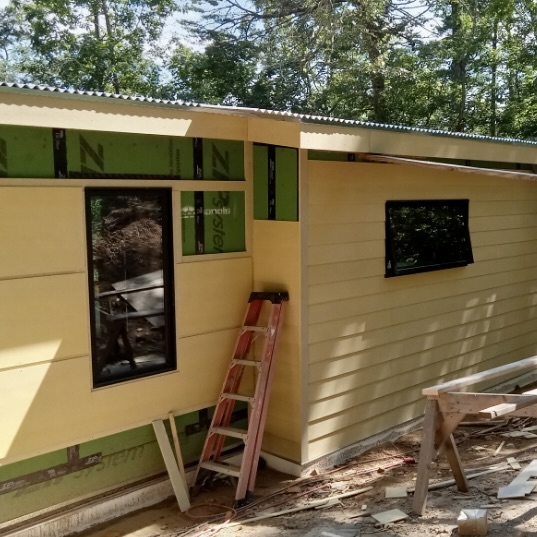
During this phase there was still work for the carpenters. They installed a weatherproof membrane on the roof deck, followed by roof panels. I’ve always admired old barns with roofs that sport deep corrugations and pronounced shadow patterns. Who knew they would be so difficult to find! Normally there would be a dedicated roofing crew for this work, but I had all of the panels cut to length and roofing crews were backed up, so Richard and his sidekick Hunter just knocked it out themselves. A recurring theme. They also managed to do all the miscellaneous work required to keep the rough in moving, such as adding blocking for accessories and installing the rigid foam insulation against the CMU walls in the basement level.

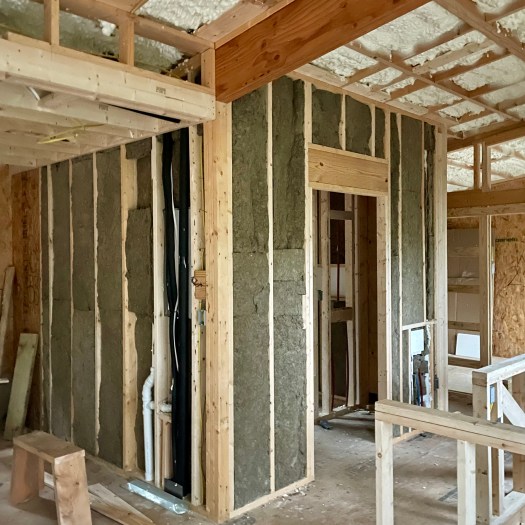
Once the rough in was officially complete, the roof/ceiling assembly was ready to insulate. In this case it was sprayed with open cell foam. This completed the sealing of the building envelope. I then took my iPhone camera and walked room by room through the entire house, taking photographs of every wall, in case I ever need to know where any of the rough-in components are located. (I have already had the need to reference these photos, twice.) Now it was time to call in the ultimate craftsmen to perform a truly precision task. Yes, it was time for Susan and me to stuff mineral wool sound batts into the interior wall cavities. The simple purpose of this task was to make the rooms quieter. We managed to complete this task in a weekend….or maybe two. With everything in the walls and ceilings, it was time to cover it up. Next on the list was hanging drywall and installing paneling; but, that and more is a story for next time, when we explore Tunnels & Lights.”.

early August: roof/ceiling insulation and sound attenuation

BONUS Material:

For most of us middle class kids growing up in the disco era, acquiring furniture and furnishings started out something like this. Your generous relatives would give you a bunch of  “heirlooms” and other stuff that they wanted to get rid of thought you could really use. Then you might go to town and buy something special from the furniture store – maybe a sofa, or a dining table, or maybe even a bedroom suite. Whatever else you needed came from Sears – the anchor store in the mall, not the little outlet in the strip center.

Now we have more choices than the Sears good, better, or best lamp, although I still think shopping local is a great option. Nothing beats putting eyes on the product. I also understand that there are other really good options. One can go on to the internet and search from thousands of lamps, to suite any taste, at various price points. This is a double edged sword, since there are a whole slew of really bad lamps out there, and you may not appreciate that until it arrives on your porch. Fortunately we were able to avoid that scenario in the case of furnishing the dinky. A ton of credit goes to Susan’s well honed shopping skills, but we’ll get to that later.

prequel: AN ORIGIN STORY

JANUARY 2024, ISSUE 1

“….. imagine a dinky house sprouting out of a small site on the Little River.” 

– Darryl Bird, Architect (and half of a client)

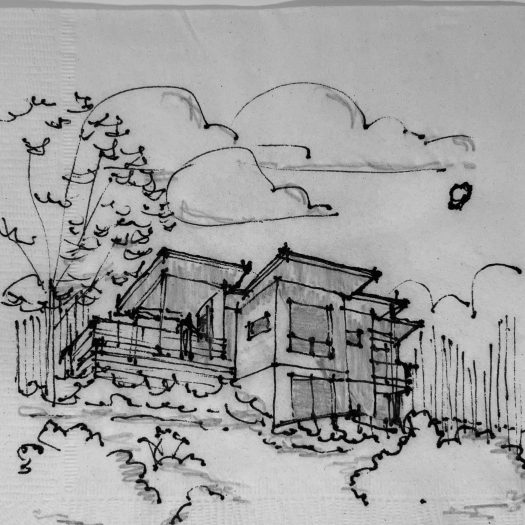
a napkin sketch of the dinky House as viewed from the dinky line

My wife and I were traveling back to Huntsville from a visit in Charleston when, out of the blue, she posed a hypothetical question. I try very hard to avoid these kinds of questions, but there was not getting out of this one, since I was stuck in the driver’s seat. She said, “What would you do if you had a million dollars?” I tried to explain that it really didn’t matter, since I did not have a million dollars…and neither did she. It didn’t work. I needed an actual answer…..so I racked my brain.

Over the years I have developed a passion for fly fishing. It’s about the fish, but it’s also not about the fish. Trout are discriminating creatures and they live in only the most scenic of places. The beautiful rivers and streams they inhabit are often remote, but I like that. I enjoy the journey. Then there’s the fishing. Fly fishing forces one to slow down, decompress, and focus on the cadence of casting. This is a welcome respite from the rigors of my profession, architecture. And, of course there is the occasional thrill of the catch. Trout were the only fish I had chased, with one exception – the redeye bass. These colorful little fish, like trout, thrive in beautiful rivers and streams. Unlike trout, however, these fish are primarily found in Alabama. These fish were on my mind as we were traveling along Lookout Mountain and nearing the Little River – the only US river that runs its full length atop a mountain. It is was in this river, specifically in DeSoto State Park and later in the Little River Canyon, that I managed to wrangle in a couple of five or six inch redeye bass!

Redeye Bass are rare, but common to the Little River

“I’d build a fishing cabin on the Little River,” I finally replied. She smiled, paused for a moment, then said, ”We can do that.” Surprised, it was my turn to pause. We then began to unpack what had just taken place. Was she serious? Was I serious? Before we knew it we were in Fort Payne. There, we pulled off at “The Spot”, a local coffee shop. The discussion started to flesh out. At the counter we picked up a copy of the Groundhog, the “paper” of nearby Mentone, and started looking for river lots. By then, we could imagine a dinky house sprouting out of a small site on the Little River. To make a long story short, I never received a million dollars, but Susan still figured out a way for us to journey from imagination to reality, all in about eighteen months.

The small fishing cabin, which we affectionately call the dinky House, is now complete…..mostly. We are at the point of wrapping up the construction punchlist while also furnishing and accessorizing it. Periodically, during the process of design and construction, I thought about how this project would be a good case study to explore on my We Shape Space blog. I now feel increased empathy for my clients who are at the beginning stages of the process. Even though, as an architect, I have been through this process many times, it is somehow different when you are also the client (or half of the client). It is truly a roller coaster ride, both thrilling and exhausting. I’m looking forward to sharing my insights and perspectives through this blog. Over the next few months I’ll discuss the various phases of design (schematic design, design development, construction documents, and procurement), as well as the various phases of construction (from coming out of the ground to the final punch list). Hopefully I can offer some unique insights and make the journey less daunting for those who get on the roller coaster. It is my intention to put out a new blog post near the end of each month. I’m already thinking about the next post of the dinky Chronicles in February: Predesign – In Plain Site.

BONUS Material:

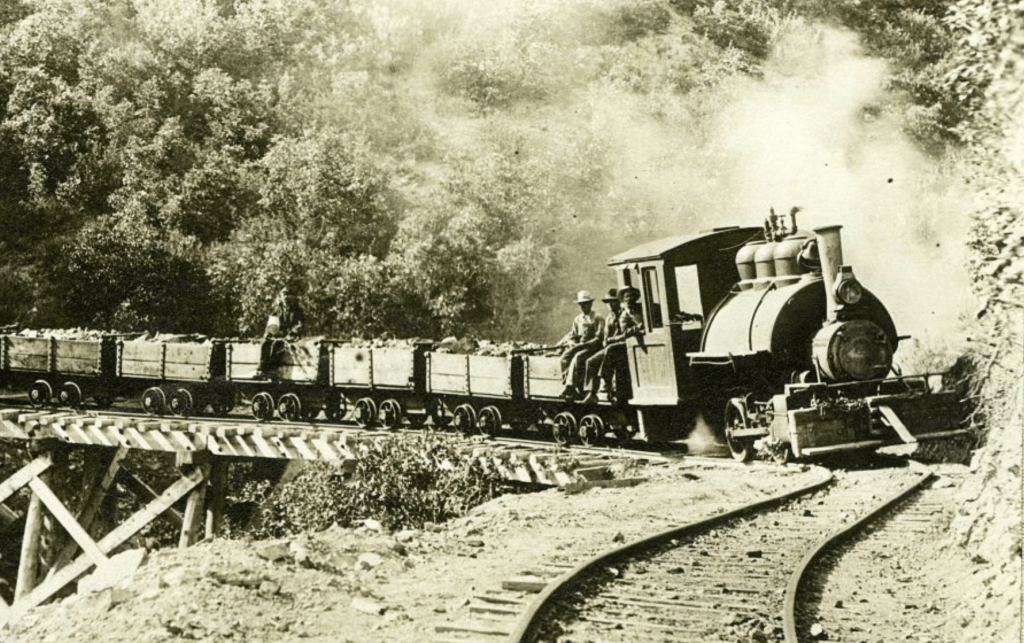
The name “dinky House” has a dual meaning. One, obviously, is that it is a small house. At less than 1200 SF it is larger than a “tiny house” but less than half the size of the average American home in 2023. The less obvious meaning is a bit harder to explain. There is a flat strip bisecting the site, through which a narrow gauge railroad ran, just after the turn of the twentieth century. The train hauled coal along the Little River, crossing it a few hundred feet away from what is now our site, and eventually delivering it in nearby Georgia. The locals affectionately dubbed it “the dinky line”. A house looking over the dinky line would logically be a dinky house, wouldn’t it?

a “dinky” railroad carrying coal