


SEPTEMBER 2024 ISSUE
“What I try to do is the art of building, and the art of building is the art of construction; it is not only about forms and shapes and images.”
–Peter Zumpthor, Architect

Peter Zumpthor is both a visionary and a practical architect. He understands that architecture is a practical art. A house is not just a piece of sculpture, nor is it simply shelter. although it must serve the physical needs of the users. The obvious physical needs to be served include provisions for eating and drinking, personal hygiene, sleeping, and exercise. Others include items of comfort such as thermal comfort, acoustics, and indoor environmental quality. The primary systems used to address these needs are plumbing, HVAC, and electrical, and they are installed in two phases. As soon as the house is dried in, the first of these phases commences; the rough-in.
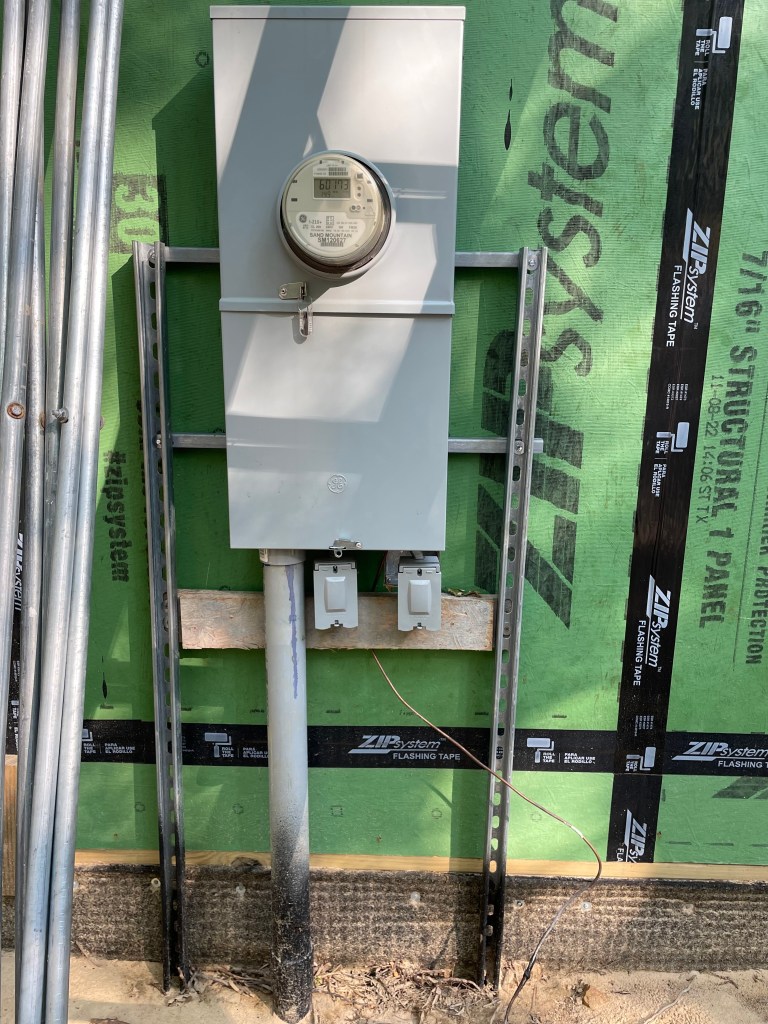
The sitework contractor normally runs all of the utilities from the utility company connection point to within ten feet of the house. The plumber, mechanical contractor, and electrician pick them up from there. The site utilities are normally run early in the construction process and are in place when the rough-in work begins. One common exception occurs when city sewer is not available, such as on a rural site. In such a case, a septic tank and drainfield are required. There are other exceptions of course, such as when the house is “off the grid”. In the case of the dinky, we did not have city sewer but we were on the grid.
Rough-in is a rare series of events where multiple subs can work simultaneously. The first of the rough-in subs to the jobsite has the advantage of running their system of piping, ducts, or wiring without having to work around the systems of the others. Occasionally the rough-in subs are all there at the same time. I’ve seen that happen on some of my projects, but not so much at the dinky house. As summer approached, construction continued to move at the speed of Jello! (Editor’s note: My cynicism is not really warranted, since I was well aware that Phil worked the dinky project into his busy schedule.)
The HVAC sub was the first to arrive in early June 2024. Most of the houses in our region of the country utilize forced air systems, but mini-splits are becoming more common. With no attics to run ducts, its whisper quiet operation, and its uber efficiency, mini-splits made perfect sense for the dinky. The use of SIPs meant that I could heat and cool the whole house with just a couple of tons. The rough in was pretty straightforward. They set the outdoor units (condensers) and ran the line sets to where the indoor units (air handlers) would eventually be. The plan called for one unit in the basement, a slightly larger one in the dining area, and one in each of the bedrooms. In a really tight house it is really important to vent it well. With an ERV bringing fresh air in and whisper quiet exhaust fans taking stale air out, we were able to maintain good indoor air quality. One “trivial” thing I want to mention. I walked into the dining area one day and noticed they located the controller smack dab in the middle of the wall, just like they always do. I had them relocate it, to the location along the edge indicated on the drawings, just like I always do.

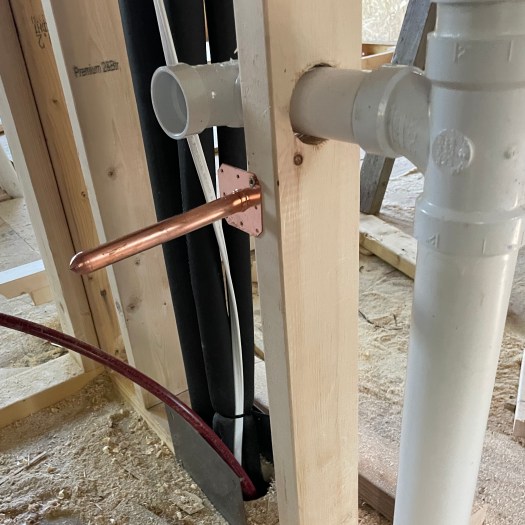
The electrician was part-time, which was a concern only for a very short period of time. He installed the panel and started pulling wires right away. He worked evenings and weekends to set the boxes for lights and plugs, except for those that were embedded in the SIPs. He easily kept pace with the other rough-in subs.
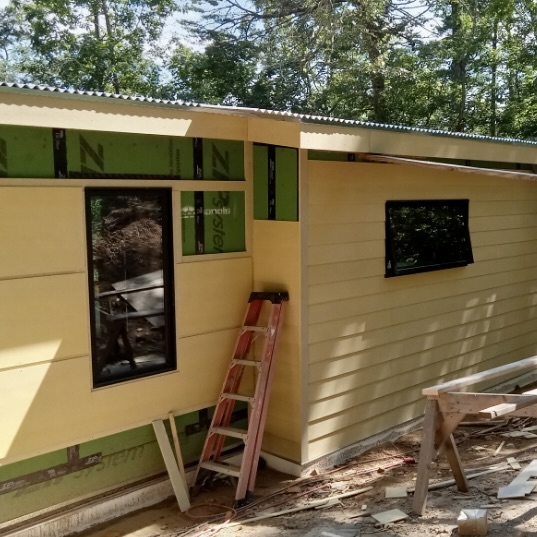
During this phase there was still work for the carpenters. They installed a weatherproof membrane on the roof deck, followed by roof panels. I’ve always admired old barns with roofs that sport deep corrugations and pronounced shadow patterns. Who knew they would be so difficult to find! Normally there would be a dedicated roofing crew for this work, but I had all of the panels cut to length and roofing crews were backed up, so Richard and his sidekick Hunter just knocked it out themselves. A recurring theme. They also managed to do all the miscellaneous work required to keep the rough in moving, such as adding blocking for accessories and installing the rigid foam insulation against the CMU walls in the basement level.

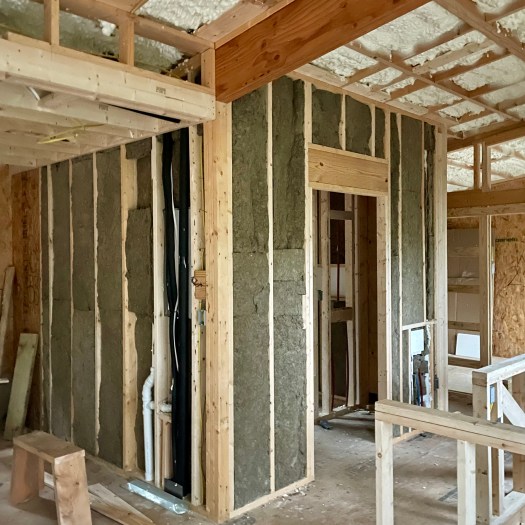
Once the rough in was officially complete, the roof/ceiling assembly was ready to insulate. In this case it was sprayed with open cell foam. This completed the sealing of the building envelope. I then took my iPhone camera and walked room by room through the entire house, taking photographs of every wall, in case I ever need to know where any of the rough-in components are located. (I have already had the need to reference these photos, twice.) Now it was time to call in the ultimate craftsmen to perform a truly precision task. Yes, it was time for Susan and me to stuff mineral wool sound batts into the interior wall cavities. The simple purpose of this task was to make the rooms quieter. We managed to complete this task in a weekend….or maybe two. With everything in the walls and ceilings, it was time to cover it up. Next on the list was hanging drywall and installing paneling; but, that and more is a story for next time, when we explore Tunnels & Lights.”.
BONUS Material:
For most of us middle class kids growing up in the disco era, acquiring furniture and furnishings started out something like this. Your generous relatives would give you a bunch of “heirlooms” and other stuff that they wanted to get rid of thought you could really use. Then you might go to town and buy something special from the furniture store – maybe a sofa, or a dining table, or maybe even a bedroom suite. Whatever else you needed came from Sears – the anchor store in the mall, not the little outlet in the strip center.
Now we have more choices than the Sears good, better, or best lamp, although I still think shopping local is a great option. Nothing beats putting eyes on the product. I also understand that there are other really good options. One can go on to the internet and search from thousands of lamps, to suite any taste, at various price points. This is a double edged sword, since there are a whole slew of really bad lamps out there, and you may not appreciate that until it arrives on your porch. Fortunately we were able to avoid that scenario in the case of furnishing the dinky. A ton of credit goes to Susan’s well honed shopping skills, but we’ll get to that later.
 we shape space